Sea moss vs greens powder is the kind of matchup that fills wellness comment sections in 2026: two plant-based staples, two devoted fan bases, and one recurring question — if you are only going to add one scoop-or-spoonful to your day, which should it be? One is a single sea vegetable with centuries of Caribbean and Irish tradition behind it; the other is a modern blend that crams an entire produce aisle into a shaker bottle.
They overlap less than you might think. Sea moss and greens powders are built for different jobs, suit different people, and fail in different ways when they are low quality. Here is an honest comparison of what each actually offers, where each shines, and how to pick the right one for how you actually live.
What Sea Moss Brings to the Table
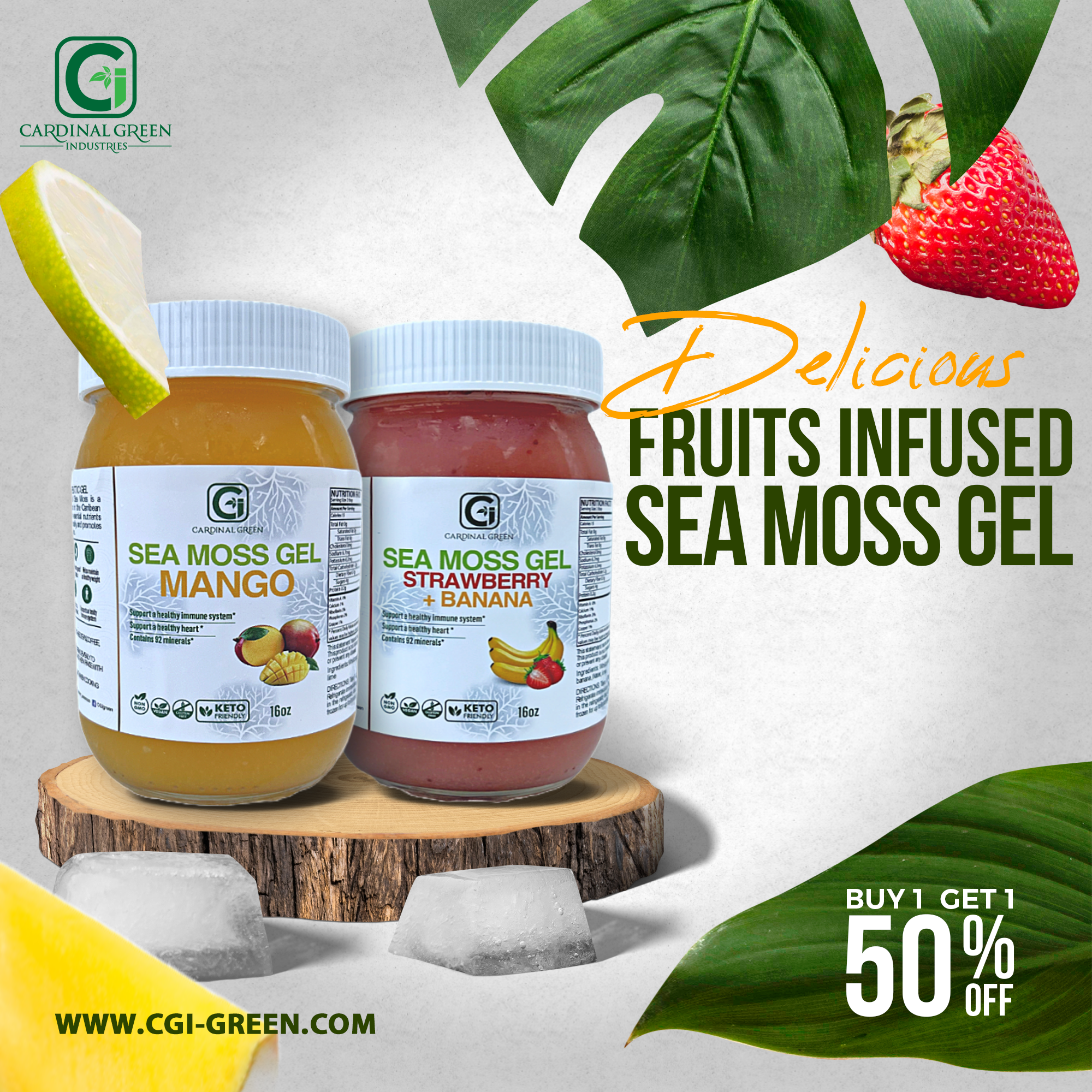
Sea moss — often called Irish moss — is a red seaweed that grows along Atlantic and Caribbean coastlines. It is traditionally simmered and blended into a gel, which can be eaten straight, stirred into smoothies and teas, or even used on the skin. As a sea vegetable, it naturally picks up minerals from the ocean water it grows in; brands like CGI Green describe their wildcrafted Caribbean sea moss as a source of dozens of trace minerals, and the gel format has a mild taste that disappears into whatever you add it to.
The honest caveat: sea moss is commonly used as a whole-food mineral source and a traditional wellness staple, but many of the bolder claims attached to it online — for immunity, thyroid, or skin — rest on tradition and early nutrition science rather than large clinical trials. Enjoy it as a nutrient-dense food, not a cure. For a deeper primer, see our sea moss benefits and how-to-use guide.
What a Greens Powder Brings to the Table
A greens powder takes the opposite approach: instead of one ingredient, it blends dozens — dried grasses, vegetables, fruits, herbs, and often extras like probiotics, adaptogens, or protein — into a single daily scoop. The pitch is coverage and convenience: one glass that backfills the fruits and vegetables you did not eat.
Quality varies enormously in this category. The better products disclose meaningful doses and pair the greens with nutrients you can actually track; the worst hide pixie dust amounts of fifty ingredients behind a "proprietary blend." Our guide on how to choose a greens superfood shake covers the label-reading in detail.
Head-to-Head: Nutrition, Taste, Convenience, Cost
- Nutritional approach. Sea moss is a single whole food valued mainly for its natural mineral content. A greens powder is an engineered blend that can deliver measured vitamins, minerals, and extras by design. Breadth goes to the powder; whole-food simplicity goes to sea moss.
- Taste and format. Sea moss gel is nearly neutral and slips into smoothies, coffee, soups, or straight off the spoon; fruit-infused gels and gummies make it genuinely pleasant. Greens powders live and die by flavor engineering — some taste great, some taste like a freshly mowed lawn.
- Convenience. Powders win for travel and speed: scoop, shake, done. Traditional sea moss gel needs refrigeration, though capsules and gummies have closed that gap.
- Cost. Sea moss products are generally the cheaper habit; comprehensive all-in-one greens shakes cost more per serving because they bundle protein, vitamins, and probiotics into one product.
Who Sea Moss Suits Best
Choose sea moss if you prefer single-ingredient, whole-food supplements, want a mineral-focused addition rather than a full nutrition shake, or simply enjoy building it into recipes. Sourcing is the thing to scrutinize — where the moss is harvested and how it is processed matter more than the label art. CGI Green, a Caribbean family brand, harvests wildcrafted sea moss in the Caribbean and produces its gels in Florida, with fruit-infused flavors like Piña Colada, Green Apple, and Wildberry alongside vegan capsules made without gelatin, fillers, or artificial ingredients.

If swallowing gel is not your thing, their strawberry, mango, and green apple gummies deliver the same habit with zero prep or refrigeration — a practical fix for travel weeks. For more options across the category, our best sea moss supplements of 2026 roundup ranks the field.
Who Greens Powders Suit Best
Choose a greens powder if your real problem is coverage — skipped vegetables, rushed mornings, inconsistent meals — and you want one product to do several jobs. This is where all-in-one shakes earn their price. VitaHustle ONE, the superfood shake founded by Kevin Hart, packs 86 superfoods, 20 g of plant protein, 22 vitamins and minerals, probiotics and prebiotics, plus a full dose of ashwagandha into each serving — with no dairy, no added sugar, and nothing artificial.

A blend like that effectively replaces three or four separate purchases — protein, multivitamin, probiotic, greens — which is the fair way to judge its cost. See how it stacks up against the competition in our best greens powders of 2026 guide.
Can You Take Both?
Yes, and plenty of people do — they occupy different slots. A common pattern: a greens-and-protein shake as the busy-morning backstop, and sea moss gel folded into evening smoothies or weekend cooking as the whole-food mineral habit. There is no known conflict between them; just read both labels so you are not doubling up on any single added nutrient, and introduce one at a time so you can tell what is actually helping.
One budgeting tip if you go this route: start with the product that solves your biggest gap first, run it for a month, and only then layer in the second. Supplements judged one at a time are far easier to evaluate honestly — and far easier to quit if they turn out to be doing nothing for you.
The verdict, then, is less "which is better" than "which gap are you filling." If you want a simple, traditional, single-ingredient mineral food, sea moss is your pick. If you want maximum nutritional coverage per minute of effort, the greens powder wins. And if your budget allows both, they make a genuinely complementary pair — which is why this rivalry will still be filling comment sections this time next year.